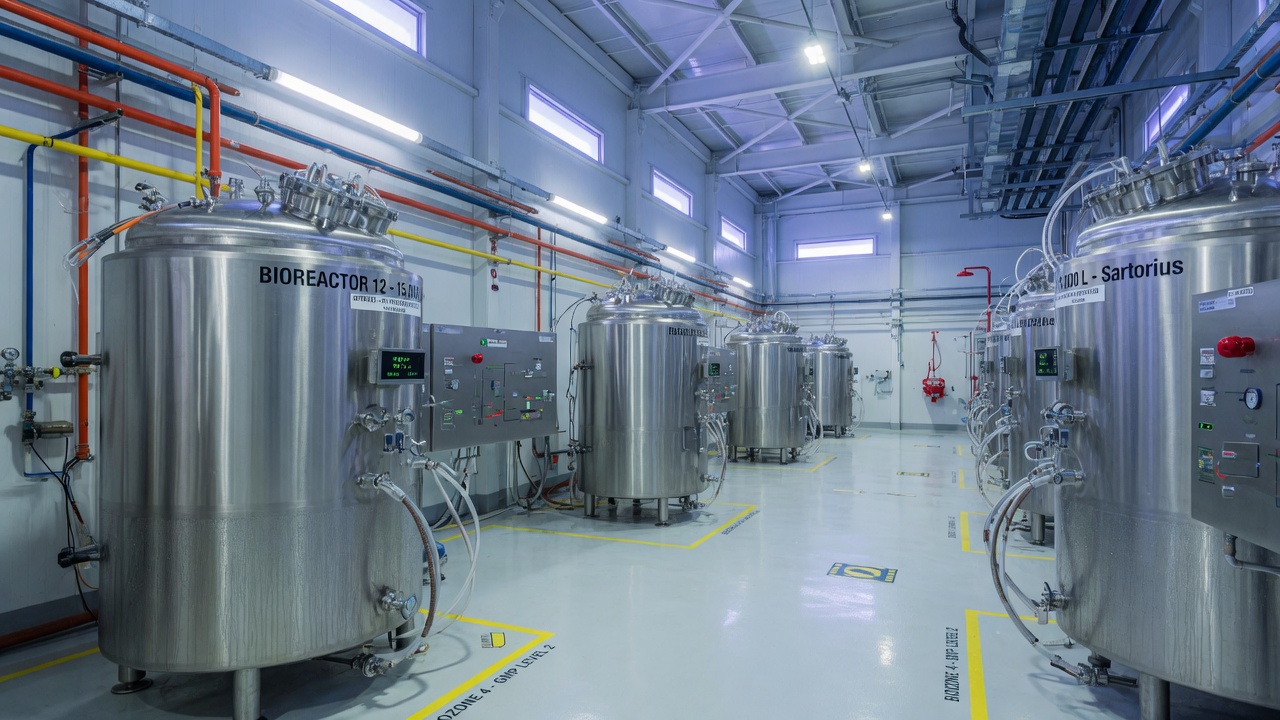
Every glamorous AI-designed molecule and gene-edited cell line eventually collides with stainless steel, single-use bioreactors, fill-finish lines, and quality-assurance paperwork. Biomanufacturing and contract development organisations are the pick-and-shovel layer of the longevity and advanced-therapy boom. When capacity is scarce, prices rise and timelines slip; when capacity overbuilds, margins compress. That cyclical industrial reality sits under multi-trillion therapy dreams.
AI optimises process parameters, predicts contamination risk, schedules plants, and accelerates tech transfer. Digital twins of bioprocesses are not science fiction; they are competitive advantage. Still, regulators require validated processes, not only clever models. Workforce training—people who can run complex plants—is a strategic national issue as important as any tax credit.

- Regional capacity for resilience (not only lowest-cost geography)
- Platform processes that lower cost per dose
- Sustainability and energy use in facilities
- Public-private training pipelines
Countries that want a longevity industry, not only longevity Twitter, invest in manufacturing competence. New Zealand-scale players may specialise rather than host every modality, but the principle stands: therapy access is a supply-chain story. Readers following “cure” headlines should ask: who can make this at volume, at quality, at a price health systems can bear?
Zoom out and the pattern across the AI-and-longevity economy is consistent: tools compress discovery and coordination costs, while societies still pay for care, trust, and labour. Biomanufacturing is the pick-and-shovel play under the longevity boom sits inside that pattern. Operators who obsess only over model demos will miss the slower work of regulation, distribution, and human adoption. Operators who ignore AI will miss cost curves that competitors ride.
For capital allocators, diversification across enabling infrastructure and clinical proof points usually beats a single miraculous narrative. For policymakers, skills, standards, and public research remain force multipliers no startup replaces. For individuals, the useful stance is practical curiosity—track evidence, protect your own health basics, and treat trillion-dollar forecasts as maps of attention, not promises of personal immortality.
Independent News for Longevity will keep covering this sector with that dual lens: respect for real science and markets, impatience with empty grandeur. The multi-trillion opportunity is large enough that it does not need exaggeration. It needs builders who can count, clinicians who can say no, and readers who can tell the difference.
Measured against multi-decade demographic pressure, this segment does not need mythical overnight disruption to matter. It needs competent operators, transparent evidence, and capital that understands regulatory time. That combination is rarer than slogans—and more valuable.
Editorial note. Business and technology education for Independent News for Longevity. Not financial, medical, or investment advice. Verify primary sources before capital or care decisions.