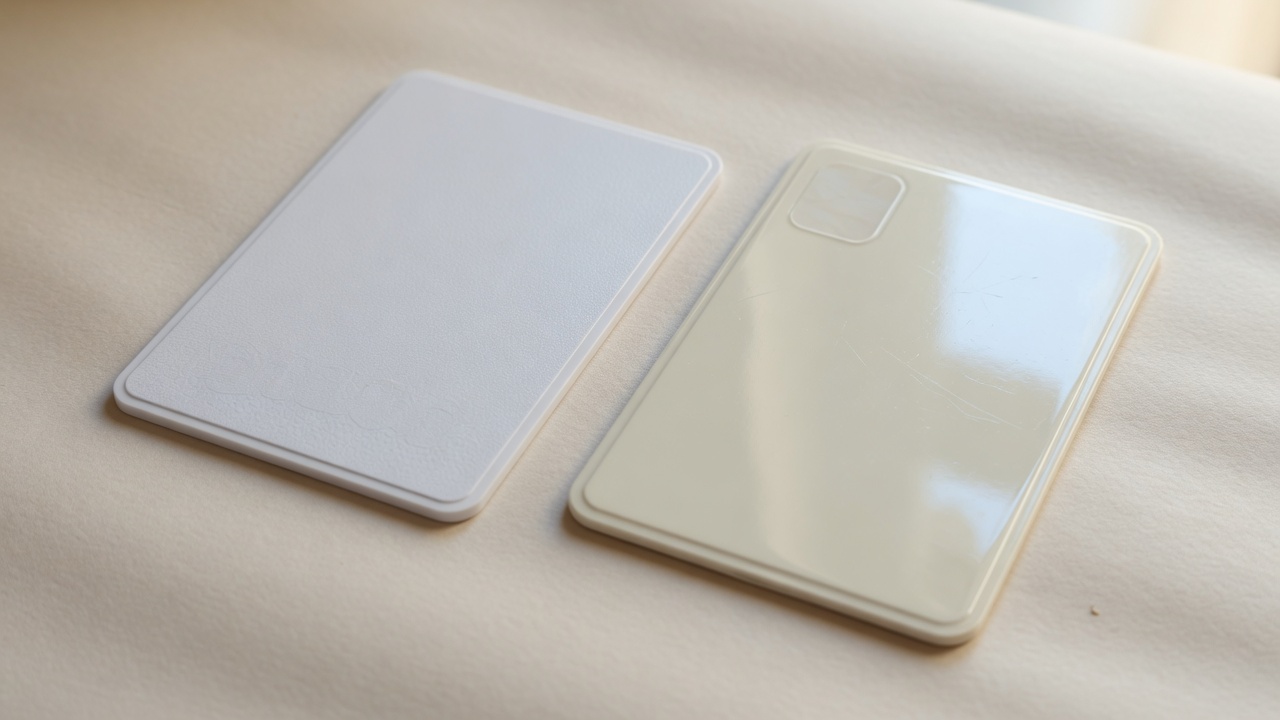
Plastic cards look simple. The material is not. Most everyday membership, loyalty, gift and ID cards have long been made from PVC (polyvinyl chloride) or PVC-type constructions. A growing share of programmes now ask for ABS (acrylonitrile butadiene styrene)— especially recycled ABS that can be recycled again as ABS where services exist.
Below is a straight overview: legality (including the United States), environment, health, how PVC and ABS compare, and when ABS is preferred.
Is PVC legal in the United States?
Yes. PVC is a widely used commercial polymer in the United States. It is not banned as a general-purpose plastic. You will find it in pipes, packaging, building products and, yes, many plastic cards. Making or selling ordinary PVC wallet cards is a normal commercial activity under federal law.
That is not the same as “risk-free” or “unregulated.” PVC production, additives, workplace exposure and waste handling sit under broader chemical, air, water and waste rules. Advocacy groups have pushed the U.S. EPA to treat discarded PVC more strictly as hazardous waste; the agency has not turned everyday PVC into a banned consumer material. Local disposal rules still vary.
Bottom line: PVC cards are legal in the U.S. Legality is not a free pass on environmental or health performance over the full life cycle.
Is PVC environmentally friendly?
No—not in any honest sense of “environmentally friendly.” PVC is durable, useful and legal. It is also chlorine-based, made from fossil feedstocks, and hard to manage cleanly at end of life. It does not biodegrade. Card waste usually heads to landfill or incineration unless a specialised recovery path exists—and small laminated cards with print, magstripes or chips are rarely “easy recycling.”
Lifecycle concerns often raised for PVC include:
- Energy and emissions from virgin polymer production
- Chlorine chemistry and associated industrial emissions if plants are poorly controlled
- Risk of dioxin and related compounds when PVC is burned under poor conditions
- Limited, patchy recycling infrastructure for mixed PVC products and finished cards
Some suppliers offer recycled-content PVC to cut virgin plastic use. That can be an improvement over first-use PVC, but it does not make PVC a green material overall. For many buyers, the clearer upgrade path is switching polymer family—especially to recycled ABS—when the card format allows.
Is PVC good for your health?
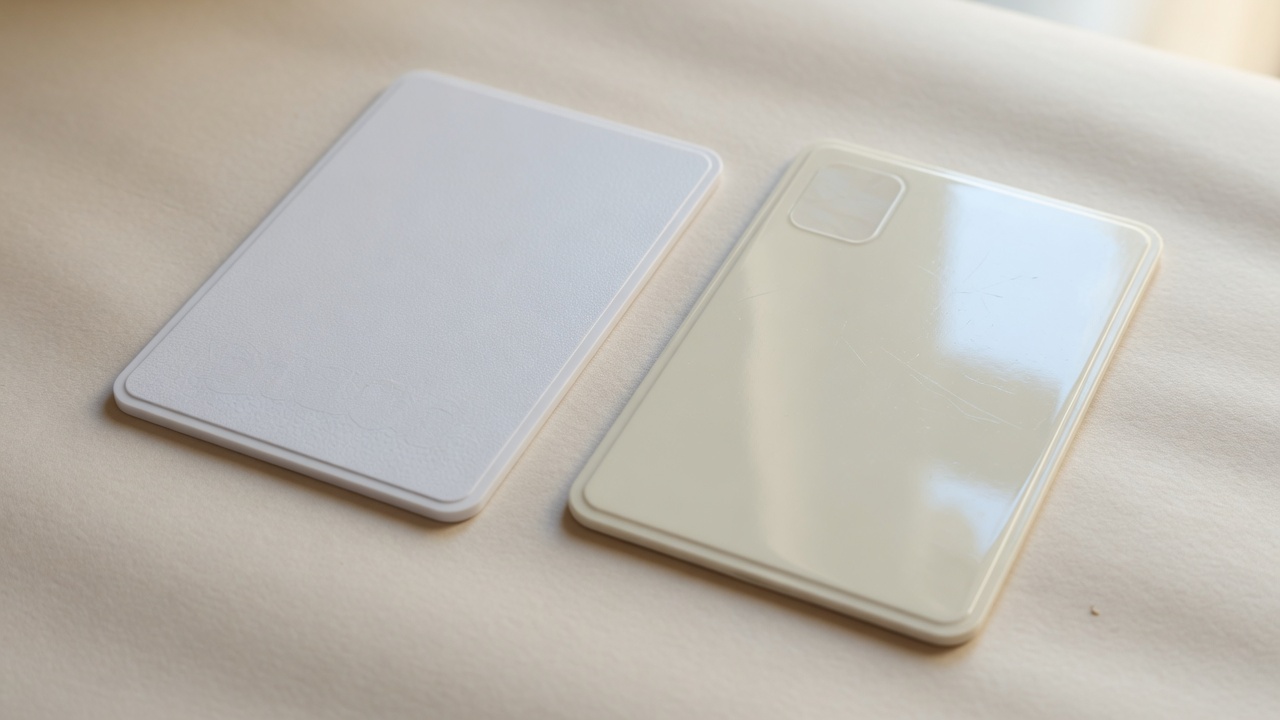
For a finished, rigid card sitting in a wallet, day-to-day exposure is not the same as working in a vinyl factory or breathing fumes from open burning. The main health debates around PVC focus on:
- Manufacturing and disposal — worker and community exposure near production and waste sites
- Additives — flexible PVC historically used plasticisers (including some phthalates) that raised health concerns; rigid card stock is a different product class, but additives still exist and formulations differ by manufacturer
- Fire and uncontrolled burning — PVC can contribute to toxic smoke if incinerated badly
Carrying a PVC membership card is not the same risk profile as chronic industrial exposure. Still, “good for your health” is the wrong frame for the polymer. A better frame: minimise unnecessary PVC where a cleaner material does the job, and avoid burning plastic waste.
Is ABS preferred—and why?
Often, yes—when the brief includes environment and end-of-life, and the format suits ABS. ABS is a tough engineering plastic. For cards it can match the durability people expect in a wallet or on a key ring, while supporting a clearer materials story:
- Recycled ABS — the card can be made with recycled content
- Recyclable ABS — ABS can be recycled as ABS where appropriate facilities accept it (always check the recycler; do not assume kerbside takes cards)
- No chlorine backbone — ABS is not a chlorinated vinyl polymer like PVC, which changes the incineration and chemistry profile
PVC is still preferred in some programmes for cost, familiarity, or printer/media specs that were written around traditional stock. Preference is shifting wherever organisations want recycled content and a recyclable-plastic pathway without giving up a proper plastic card.
ABS (especially recycled ABS): often preferred for durability plus recycled/recyclable credentials when the card format and equipment allow it.
Environmental impacts: PVC vs ABS
Neither polymer is “nature friendly.” Both are plastics. The useful comparison is relative impact and recovery options.
- Feedstock and chemistry — Both are fossil-based when virgin. PVC brings chlorine into the polymer; ABS does not. That difference shows up most in industrial emissions control and in how waste burns.
- Recycling in practice — PVC card recycling is limited and often uneconomic for mixed small items. ABS has established recycling routes in some industrial streams; finished cards still need collection and sorting—recovery is a programme design problem, not magic.
- Recycled content — Recycled ABS cards let you put post-consumer or recycled feedstock into the product people carry. That displaces some virgin plastic, which is one of the few levers that clearly cuts production impact.
- Landfill and litter — Neither breaks down usefully in the environment. Prevention, reuse length, and take-back beat “wishcycling” every time.
- Embedded components — Magstripes, chips and mixed layers complicate recycling for any polymer. Simpler constructions and supplier take-back help both PVC and ABS programmes.
Choosing material for a real card job
- Match thickness to use—often about 0.76 mm for wallet cards; thinner or thicker only when needed
- Confirm printers, readers and holders accept the material and thickness
- Prefer recycled ABS when format allows and sustainability is part of the brief
- Plan what happens to expired cards—collection beats landfill slogans
More detail on materials and thickness
For New Zealand-focused guidance on plastic card materials, thicknesses and recycled ABS options, see:
Plastic card materials and thickness — plasticcard.nz
That guide covers standard wallet stock, thinner and thicker formats, equipment fit, and recycled ABS— the practical next step before artwork and quantity are locked in.