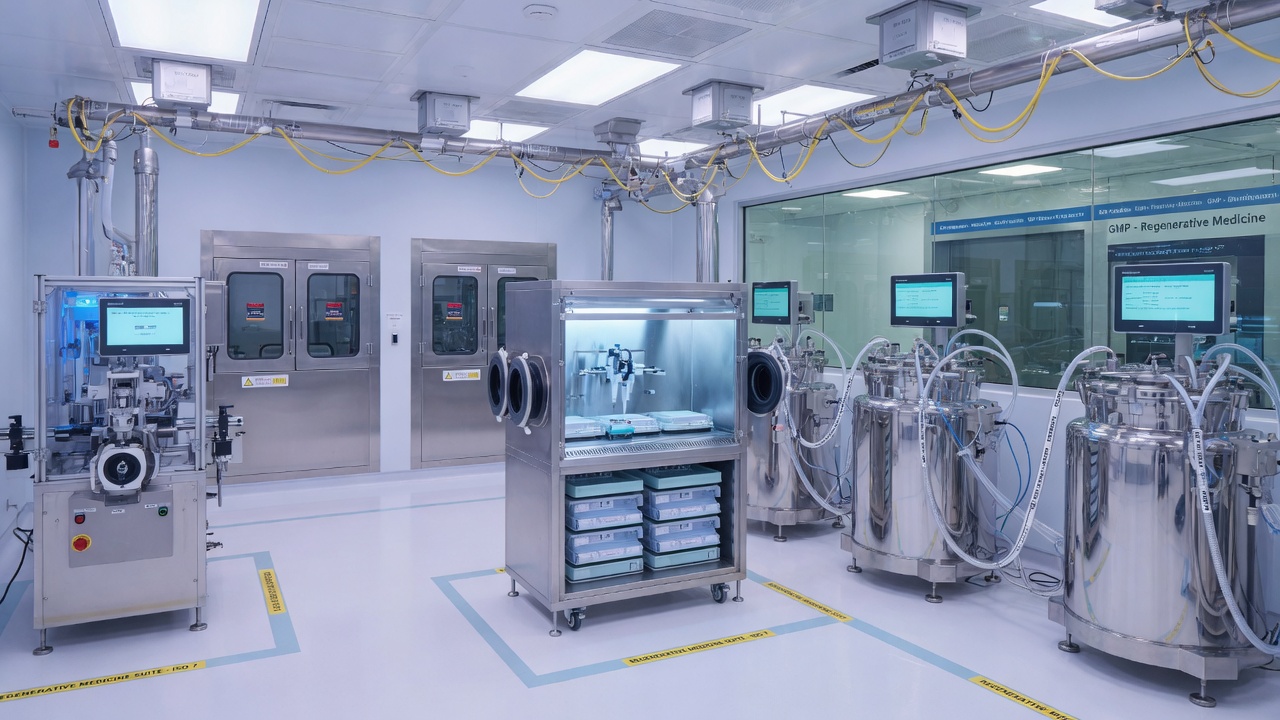
Regenerative medicine sells a sentence people desperately want: replace what aging and injury took. Stem-cell derived products, engineered tissues, exosome-flavoured clinics of uneven quality, cartilage repair, retinal programmes, cardiac patches—the scientific portfolio is wide and the marketing portfolio is wider. The legitimate industry already commands serious capital because a single approved cell therapy can justify enormous development spend when it addresses high-cost disease. Stretch that logic across multiple organs and indications and strategists start whispering about multi-trillion displacement of chronic care.
AI accelerates design of culture conditions, predicts differentiation outcomes, optimises bioreactors, and helps quality control spot batch drift. That is real industrial leverage. It does not remove the core constraints: sterile manufacturing capacity, chain of identity for autologous products, cold chain logistics, and long-term safety surveillance. A therapy that costs as much as a house will remain a headline, not a population longevity tool.
Autologous versus off-the-shelf
Personalised cells can fit the patient and wreck the factory schedule. Allogeneic, standardised products behave more like drugs—if immune issues and consistency cooperate. Much of the multi-decade opportunity hinges on which model wins for which disease. Investors who cannot explain that distinction are funding poetry.

- Contract development and manufacturing (CDMO) capacity as strategic bottleneck
- Hospital readiness: apheresis, specialised nursing, outcome registries
- Crackdown risk on unproven stem-cell tourism
- Combination plays with gene editing and biomaterials
Longevity readers should separate repair of specific failure modes from the fantasy of whole-body rejuvenation on a weekend drip. The multi-trillion path runs through indications payers understand, endpoints regulators accept, and costs that fall with volume. Everything else is atmosphere. Independent News for Longevity will keep cheering for rigorous programmes and calling out clinics that sell hope without protocols.
Zoom out and the pattern across the AI-and-longevity economy is consistent: tools compress discovery and coordination costs, while societies still pay for care, trust, and labour. Regenerative medicine is a manufacturing and trust problem disguised as miracles sits inside that pattern. Operators who obsess only over model demos will miss the slower work of regulation, distribution, and human adoption. Operators who ignore AI will miss cost curves that competitors ride.
For capital allocators, diversification across enabling infrastructure and clinical proof points usually beats a single miraculous narrative. For policymakers, skills, standards, and public research remain force multipliers no startup replaces. For individuals, the useful stance is practical curiosity—track evidence, protect your own health basics, and treat trillion-dollar forecasts as maps of attention, not promises of personal immortality.
Independent News for Longevity will keep covering this sector with that dual lens: respect for real science and markets, impatience with empty grandeur. The multi-trillion opportunity is large enough that it does not need exaggeration. It needs builders who can count, clinicians who can say no, and readers who can tell the difference.
Editorial note. Business and technology education for Independent News for Longevity. Not financial, medical, or investment advice. Verify primary sources before capital or care decisions.