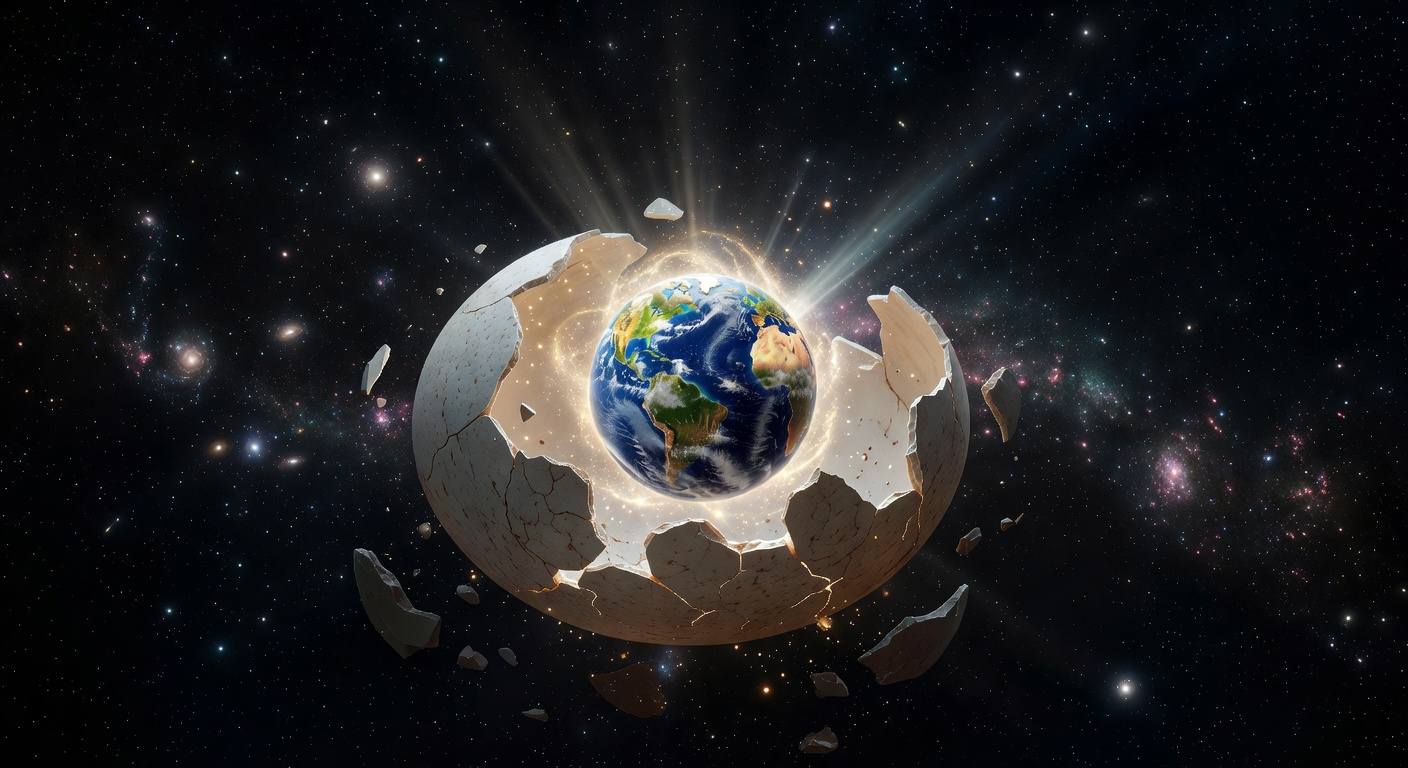
The Gaia Odyssey is an educational website. That is the plain fact. It exists to teach—cosmos, Earth, life, dinosaurs, and early humans— in one continuous story instead of scattered trivia.
You will find it at https://gaia.co.nz/. Open it when you want to learn: structured chapters, original video, animation, and science written so a curious adult or a sharp teenager can stay with it for a full evening.
It is not a shop. It is not a social feed. It is an online learning experience about 13.8 billion years of history—from the first light after the Big Bang, through the origin of life and the Cambrian seas, across 165 million years of dinosaurs, into the age of mammals and prehistoric people.
Educational site → live now. Start on the homepage, then pick a chapter. Free to browse.
Open the educational site →What you learn on the site
Four teaching chapters. One timeline. You can jump in anywhere; the design still points you through the full arc—from the first light after the Big Bang to minds that could ask where they came from.
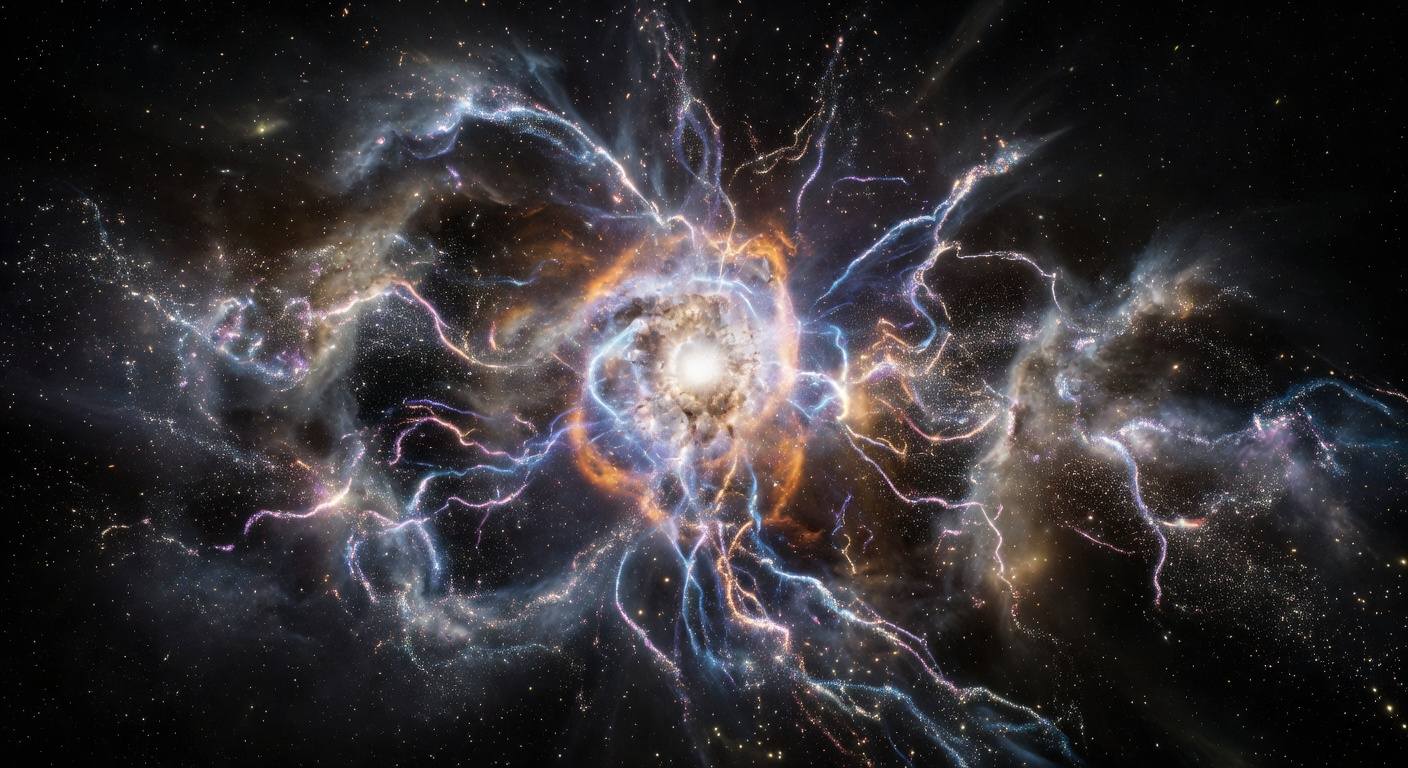
Cosmic Origins
Big Bang, first stars, galaxies, solar system, and Earth’s violent youth—where the elements of your body were forged.
The story begins with a hot, dense early universe expanding and cooling into the first atoms. Gravity pulls gas into the first stars; those stars forge heavier elements and die, seeding later generations of stars and planets. Galaxies assemble. In one ordinary spiral arm, a cloud collapses into our Sun and a disk of debris.
Worlds collide and differentiate. Earth forms hot and restless—magma oceans, a late giant impact that helps shape the Moon, a surface that will not stay still. The chapter makes a simple point easy to feel: calcium in your bones and iron in your blood are not “from Earth” in a shallow sense. They are stellar leftovers, recycled through deep time before life ever began.
You leave Cosmic Origins with a map of scale—seconds after the Bang, millions of years for galaxies, billions for a habitable world—and a clearer sense that “beginning” is not a blank page. It is physics, chemistry, and collision, written large enough that curiosity has room to breathe.
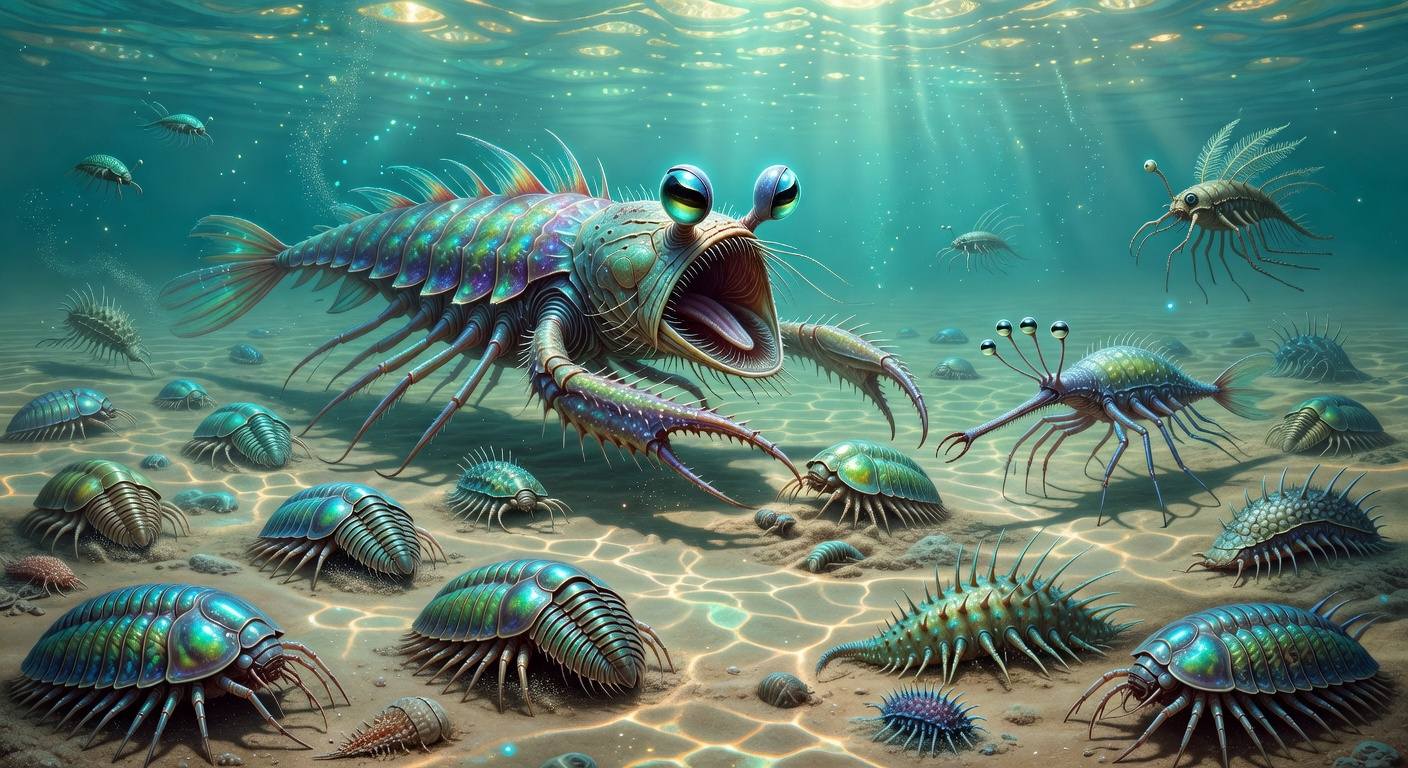
The Living Earth
Life from chemistry, oxygen rising in the air, the Cambrian burst of body plans, forests, and extinctions—life remaking the planet as the planet remakes life.
The path runs from simple chemistry toward cells, then toward ecosystems that change atmosphere and climate. It is not a straight march of progress; it is experiment, dead ends, and recovery after collapse. When complex animals appear in the seas, the world gains new food webs and new ways of sensing.
Plants push onto land. Oxygen and carbon cycle through living systems. Mass extinctions clear the board and open niches. By the time this chapter ends, Earth is already a living planet in the full sense—and ready for the age of dinosaurs.
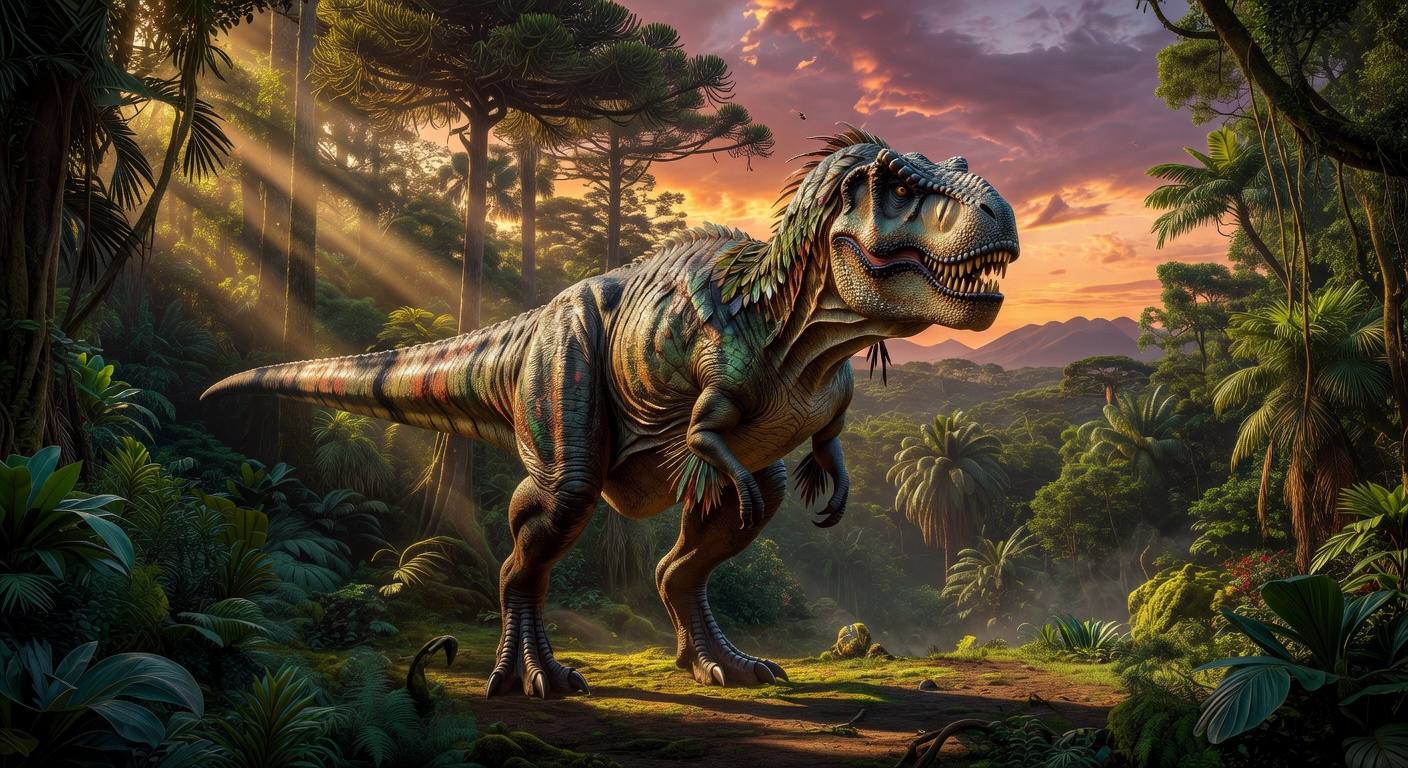
Dinosaur Age
About 165 million years of giants—predators, sauropods, odd specialists—with original video and animation along the path, not only a list of Latin names.
The chapter places dinosaurs inside ecosystems: plants, climate, competitors, and time enough for many experiments in size and form. Famous animals appear as characters in a longer story, not as isolated posters.
When the age ends, it ends hard—and the clearing of that world is what makes the next chapter possible. Curiosity here is not childish; it is how people stay awake to deep time.
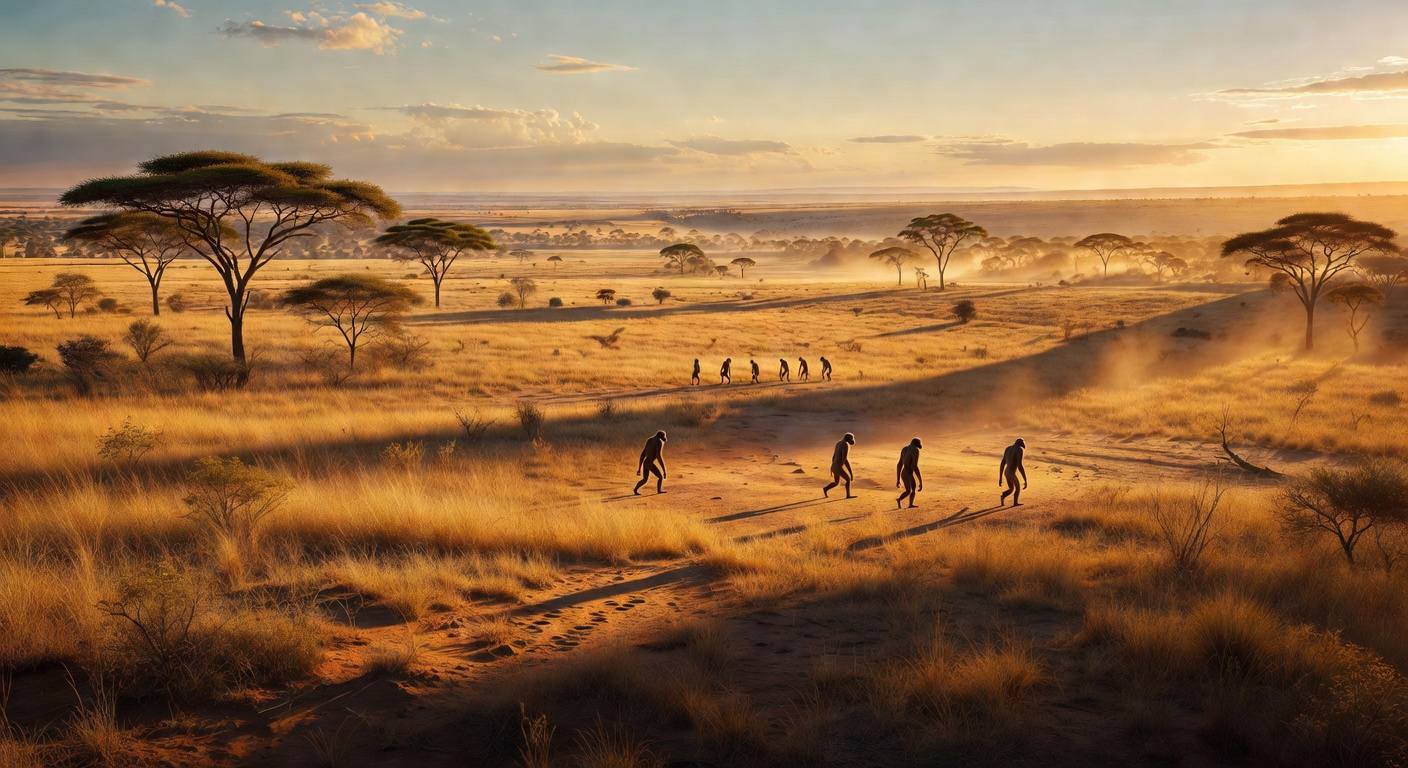
Cenozoic Dawn
Mammals diversify, primates appear, and stone-age minds emerge—the chapter where deep time finally arrives at us.
After the dinosaurs, mammals fill roles across land and sea. Climate shifts again and again. Lineages that lead toward humans walk, use tools, and leave traces that archaeology and genetics can still read.
The point is not flattery. It is perspective: we are late arrivals on a very old stage, carrying chemistry from stars and history from extinctions we never saw. That humility is part of what good science education is for.
How it teaches
- Chapters, not chaos — clear sections so you always know where you are in time
- Video and animation — built for watching as well as reading
- One story — dinosaurs sit after life begins, not as an isolated fan page
- Built for real people — solid for home learning, family curiosity, or anyone who wants science without the lecture hall
Who it is for
Anyone who wants a proper educational path through deep time without drowning in academic papers or kids’ cartoon fluff. Parents. Teachers hunting a quality link. Adults who still like to learn after work. If that is you, the website is waiting.
Why we list it here
This inl.co.nz page is a short editorial intro. The full educational website is on its own domain. We recommend it because it does the job of teaching at scale—literally cosmic scale—with enough craft that people stay and learn.
Go learn. The educational website is free to explore.
Visit the educational website gaia.co.nz →Explore the full free educational website at gaia.co.nz — The Gaia Odyssey.